Achieveing the "Paris, Texas" look with tri-band interference filters : green fluorescent tubes.
Publié le 5 septembre 2026
Some background
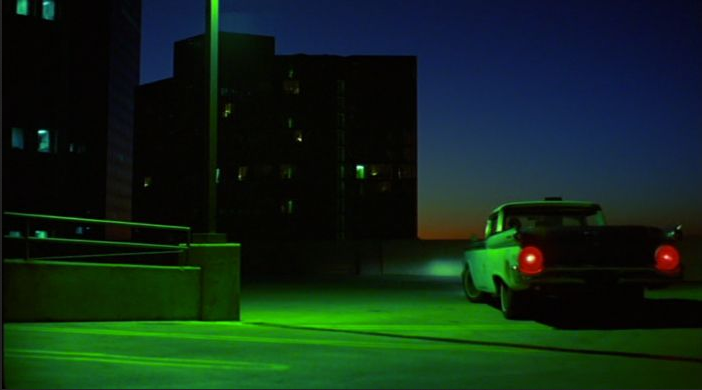
Paris, Texas is probably the most famous film by director Wim Wenders. It was realeased in 1983 and the cinematography was made by Robby Müller who also shot most of Wenders' previous films.
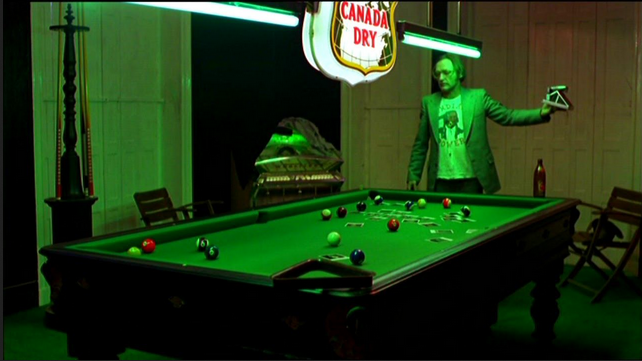
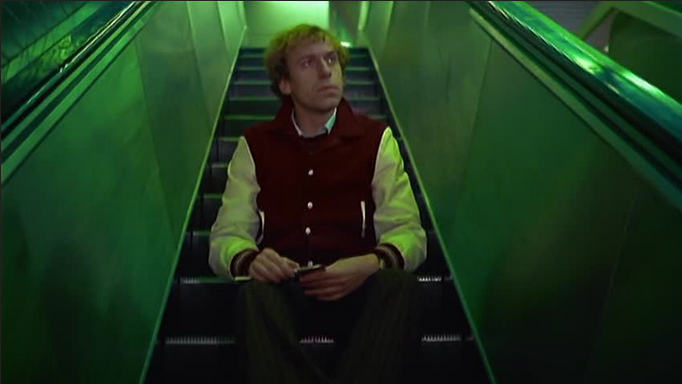
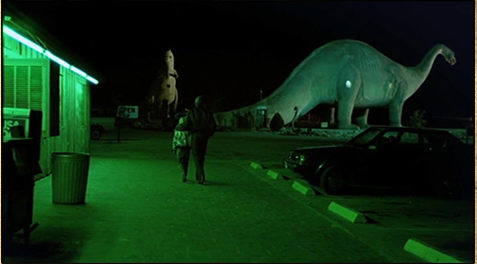
A stricking visual peculiarity of the films these two made together is the intentional green color of fluorescent lights. As stated by Wenders himself in the audio commentary of the DVD edition, he and Müller intentionally shot under natural urban light without correcting the green tint of fluorescent lights that appeared on the film stocks of the time.
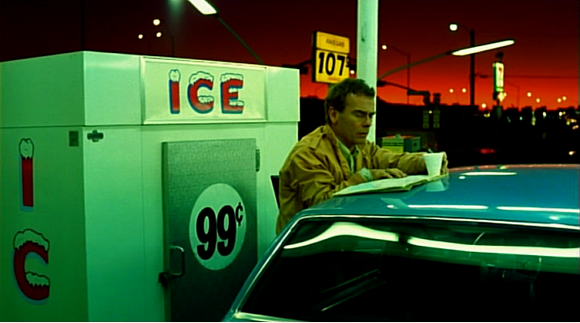
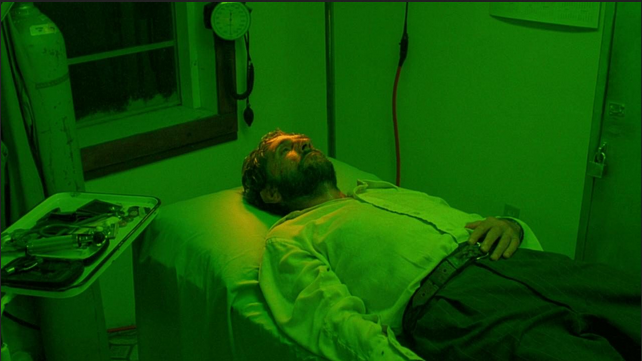
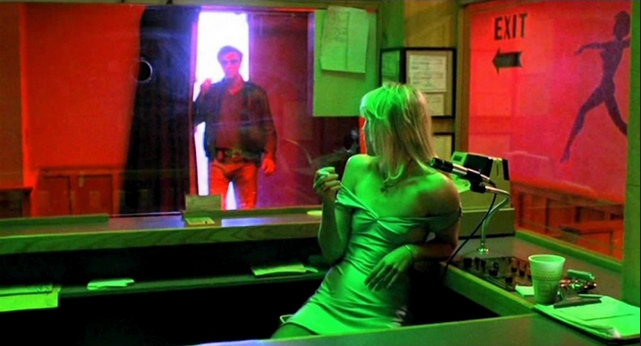
Paris, Texas is not the first movie by Wenders and Müller to look like this :
This one is from the American Friend (1977)
And this one is from Wrong Move (1975)
An idea crossed my mind
In december 2023, Harman, the famous Black and white film company, released its first color film : the Phoenix 200. Unlike other well experienced brands like kodak or Fuji that make hi-end color films Harman's film is rather lo-fi. It has a narrow dynamic range, a lot of grain.
Very quickly a lot of pictures taken with this film popped up on the internet. One thing struck my mind : Fluorescent tubes and some LEDs came out green, the same "poisonous green" Wenders talked about in the commented version of his films.
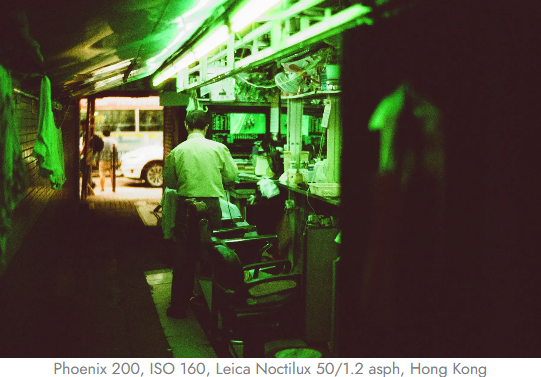
The credit for this image goes to ANSON TANG.
I was suddenly reminded of Wenders' and Müller's aesthetic and how much I had liked it 10 years earlier when I saw the films.
Could I reproduce this look and this particular response to fluorescent tubes on a digital camera ?
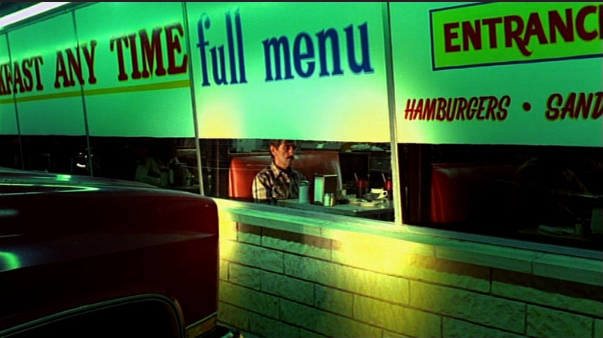
Why does fluorescent tubes look green on film ?
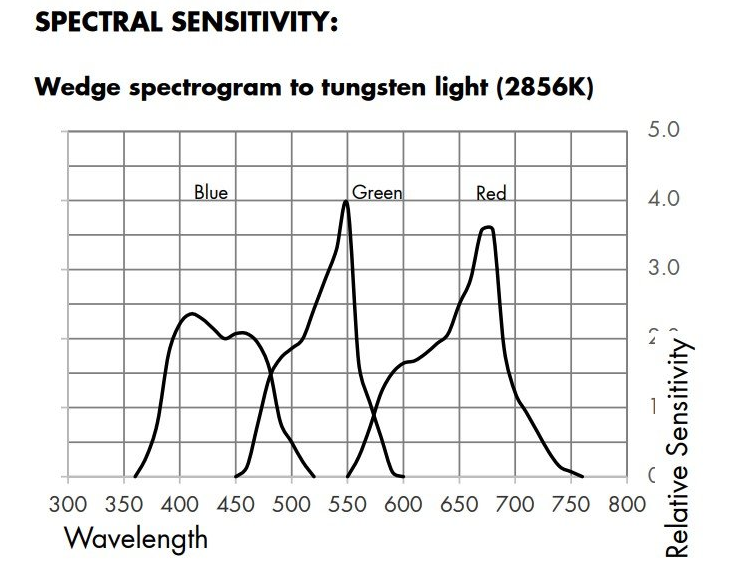
The Phoenix seems to behave more like older film stocks. I don't remember newer film stock having such a strong green tint when used under artificial lights. I went searching for the film's datasheet and found a spectral sensitivity chart for the Phoenix 200 that looked really odd when compared to other modern film stocks :
Now let's compare it to a high end modern film stock like Kodak's Vision 3 250D :
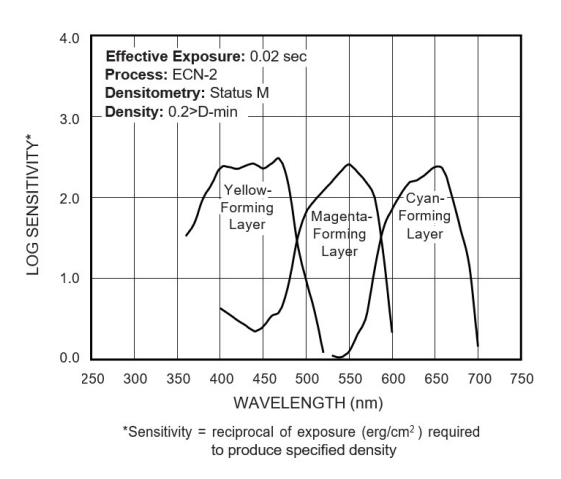
Both films are very different. The phoenix has very strong sensitivity peaks et 550nm (bright green) and 675nm (very deep red, almost invisible to the human eye). The Vision 3 in the contrary covers the visible spectrum more evenly and doesn't have spikes.
Now let's compare the Phoenix's sensitivity against the typical emission spectra of a fluorescent tube :
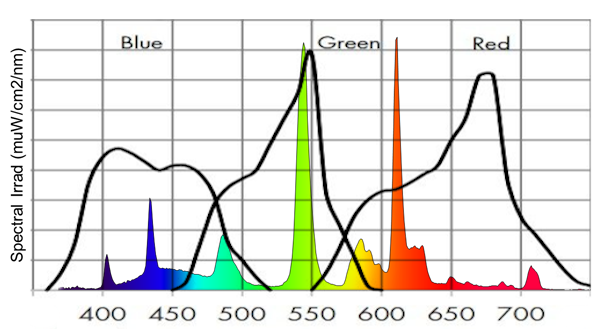
On one hand the green sensitive layer's spike of the Phoenix lines up with the green 546nm emission line of the fluorescent tube and on the other hand the the red sensitive layer of the phoenix "misses" the red 612nm emission line from the fluorescent tube.
It's this misalignment and alignment of sensitivity spikes and emission lines that causes the film to misinterpret the color of fluorescent tubes.
To better understand this phenomenon we can compare the sensitivity spectra of the phoenix with the human eye's :
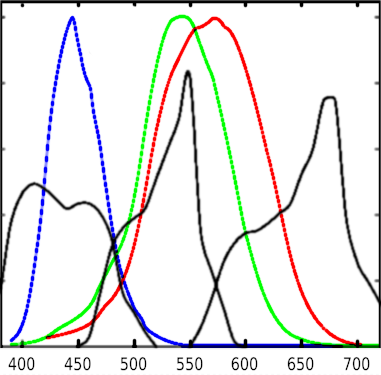
We can see how the Phoenix sees the red much later in the spectrum than humans. It is expected that some colors will be off with this film stock with such a difference.
Fluorescent lights have a lot of bad press amongst humans but they are mostly white to our eye. Here is the fluorescent tubes emission spectra VS the human eye's sensitivity spectra.
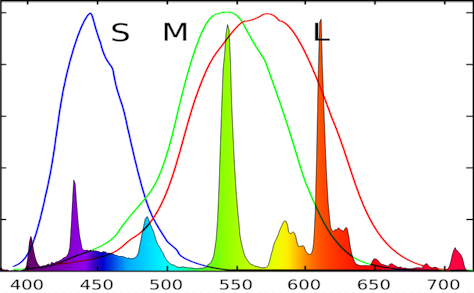
The red line falls right where the green cone cells sensivity is low relative to the red cone cells. This is the perfect spot to emit red : if it were later we would have trouble seeing it due to our sensitivity declining fast in the deep red region. If it were sooner we would percieve it as orange or yellow.
I wonder if the this bad press comes in part from all the movies we saw where the green tint was really obvious and less from real life where they are white.
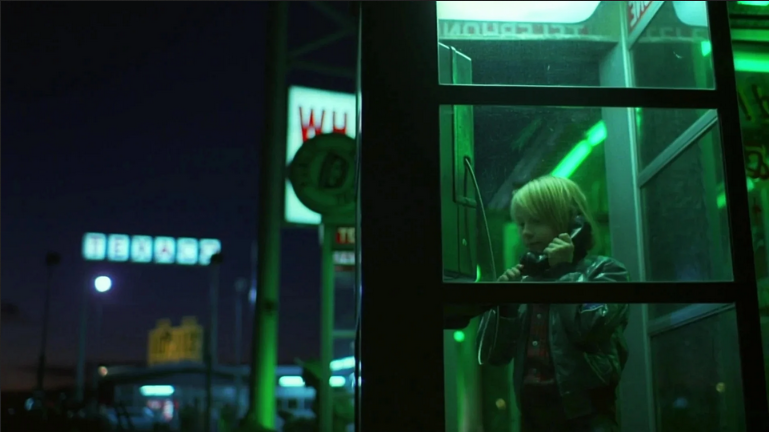
How do I recreate this with a digital camera ?
If the green effect is provoked by the red sensitive layer of film missing the red emission band of the light source then could I recreate this quirk on a digital camera with a specific kind of filtration that would mimic the sensitivity spectra of the film ?
That's what I tried to do and it worked ! My first try was with stack of two filters on un unconverted Fuji XT-3 :
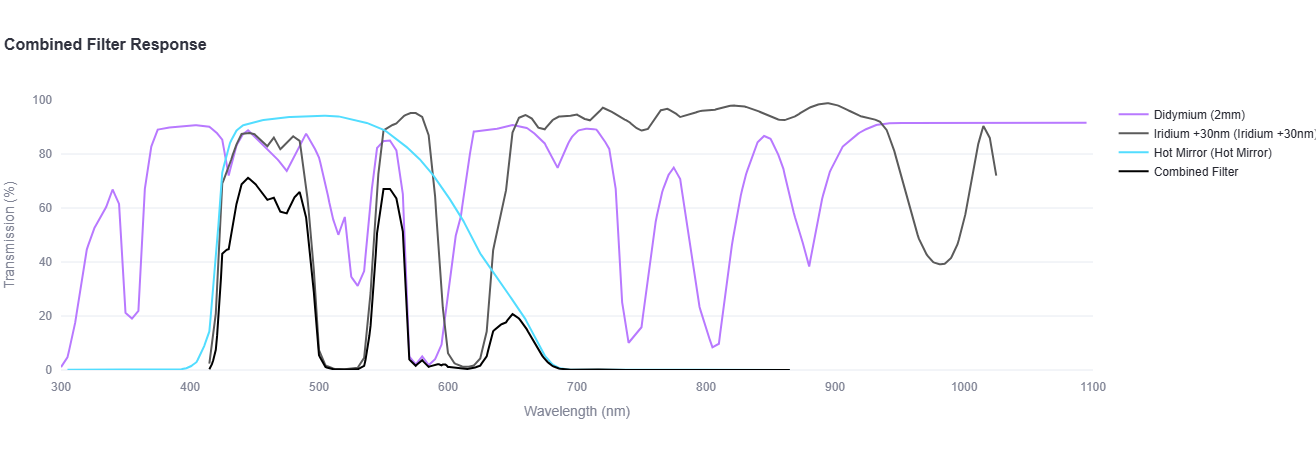
Faulty Kolary Iridium (the announced TR curve didn't match the filter's transmission)
Didymium filter
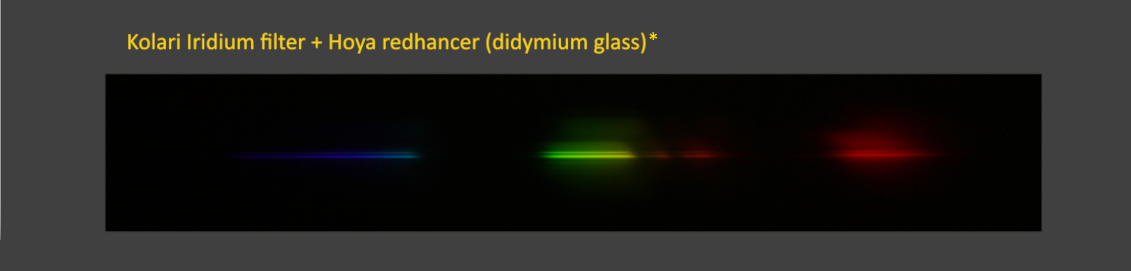
Here is what the combined transmission looked like. I made sure there was no light transmission around 612nm :
And here is what a grating test gave me :
And here is some photos I got with this stack :


After this discovery I bought a roll of Phoenix 200 and headed back to the old covered market where I could still find some fluorescent tubes.
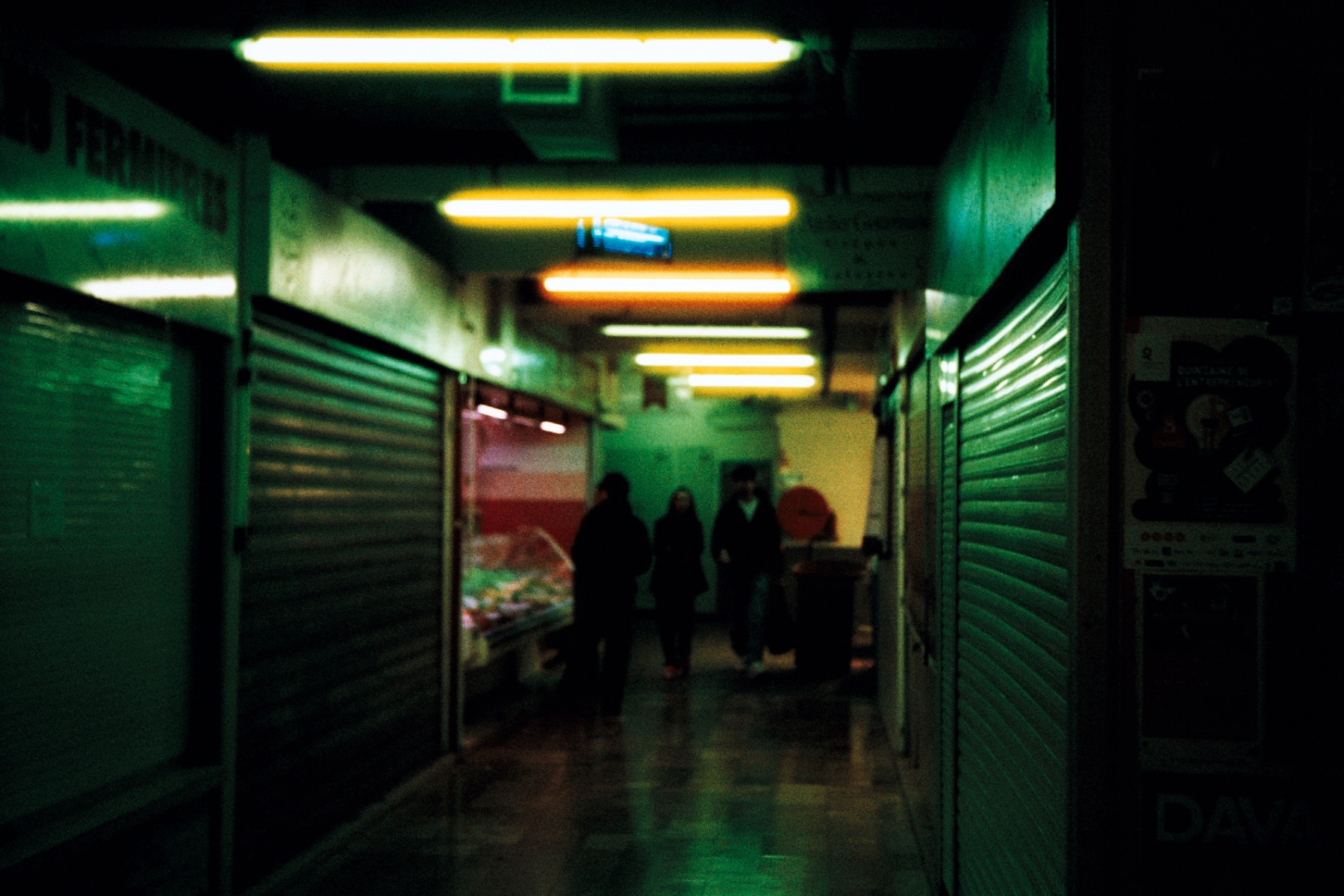
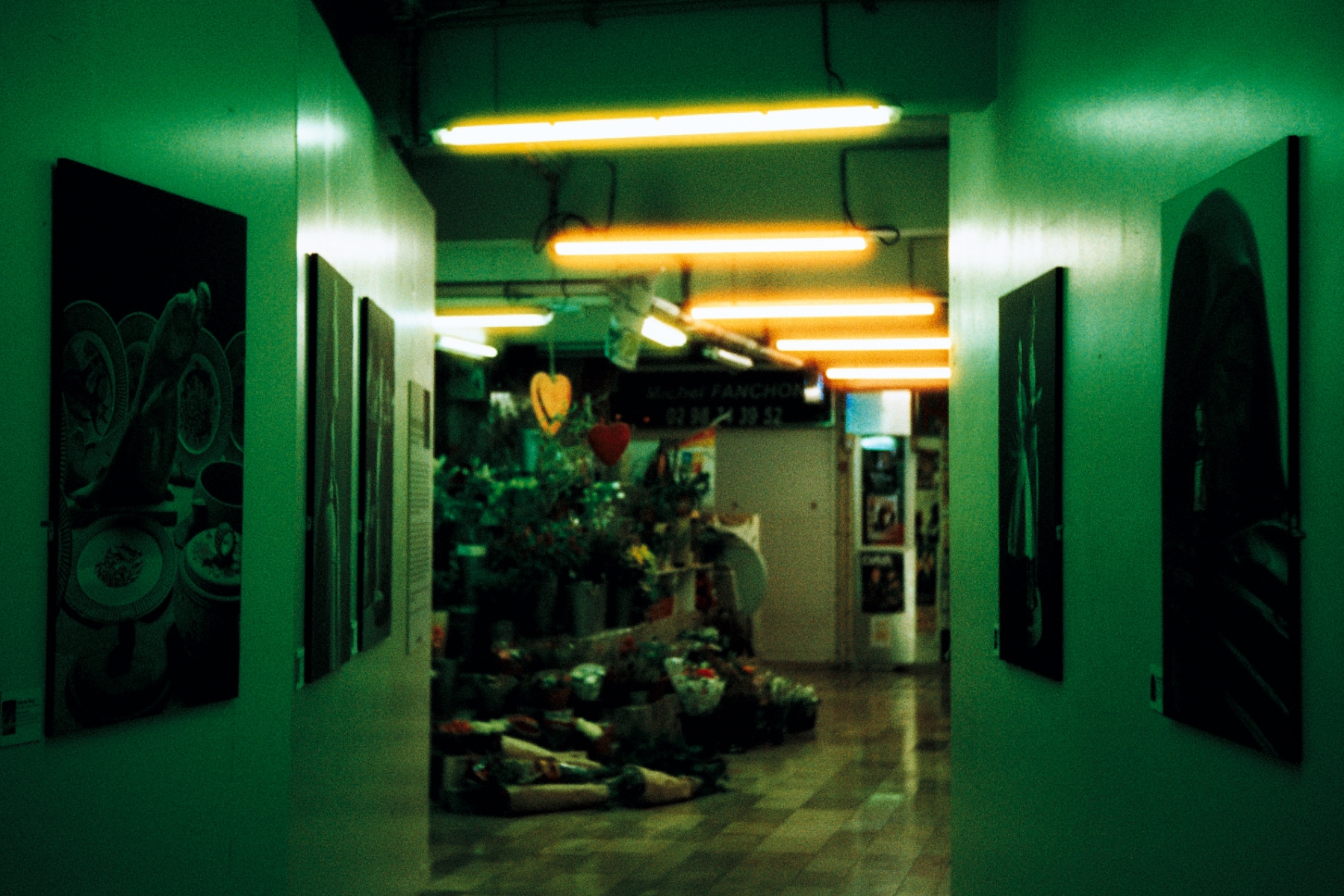
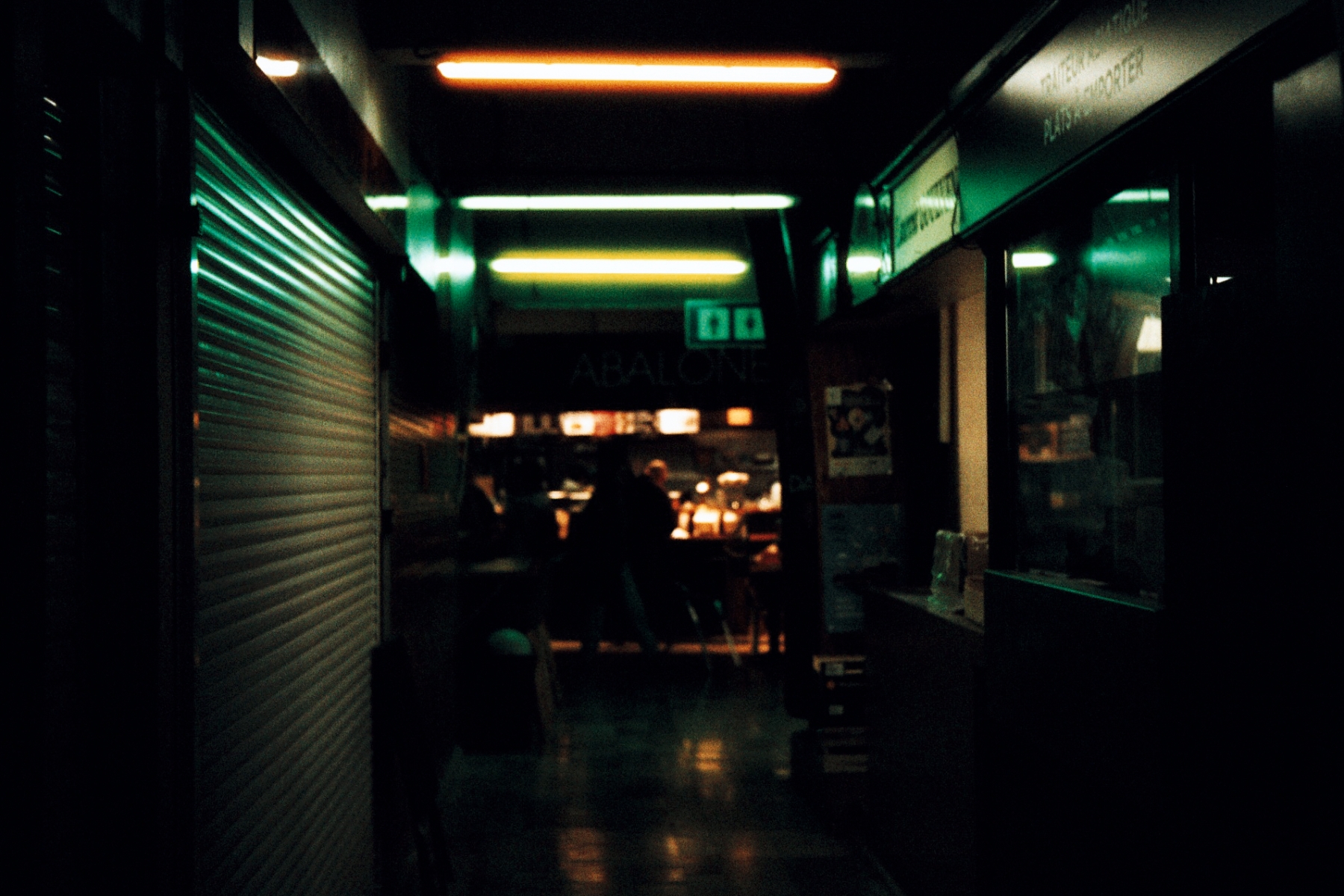
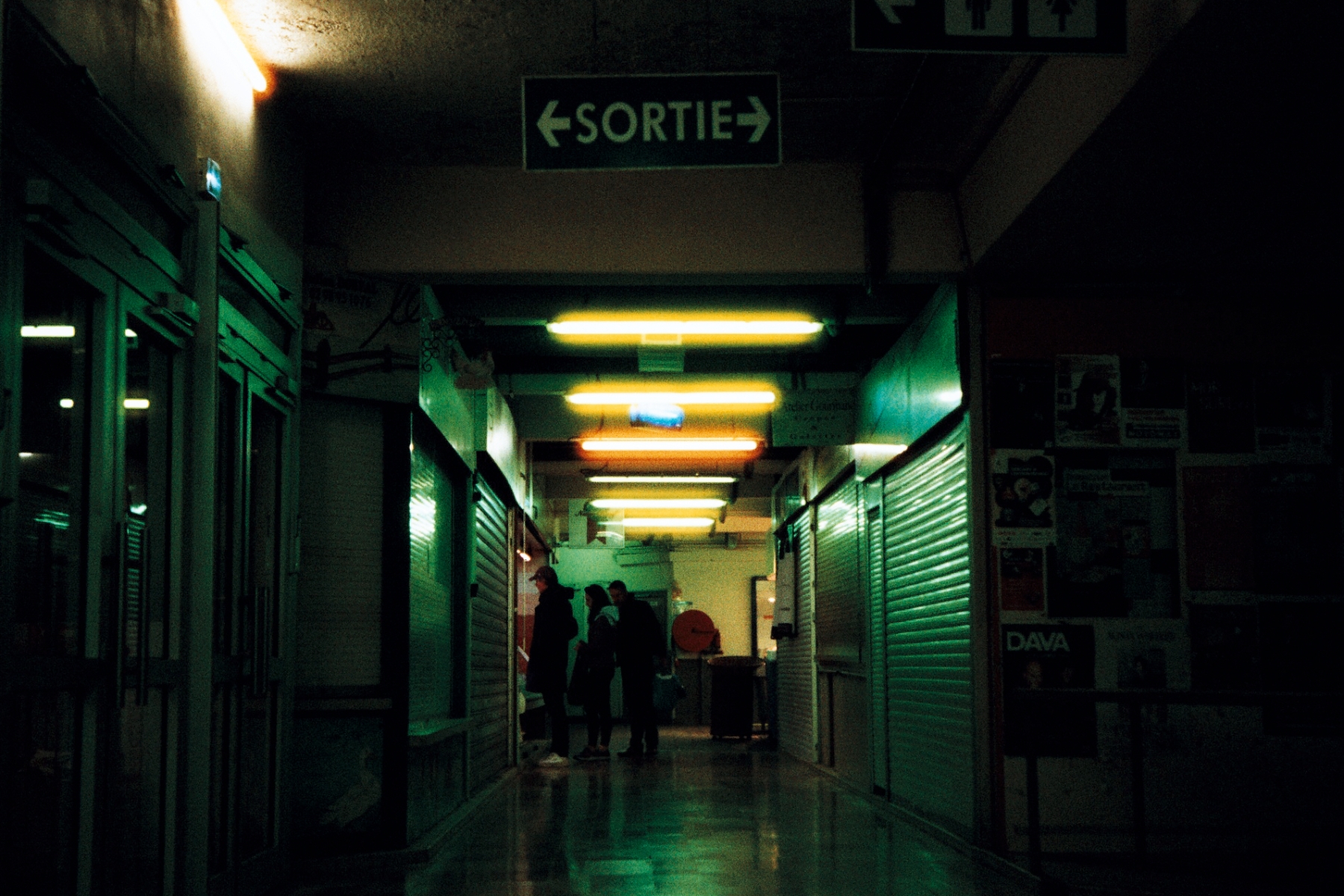
Maybe a year after that I came across an other filter that could be a one filter solution for this look :
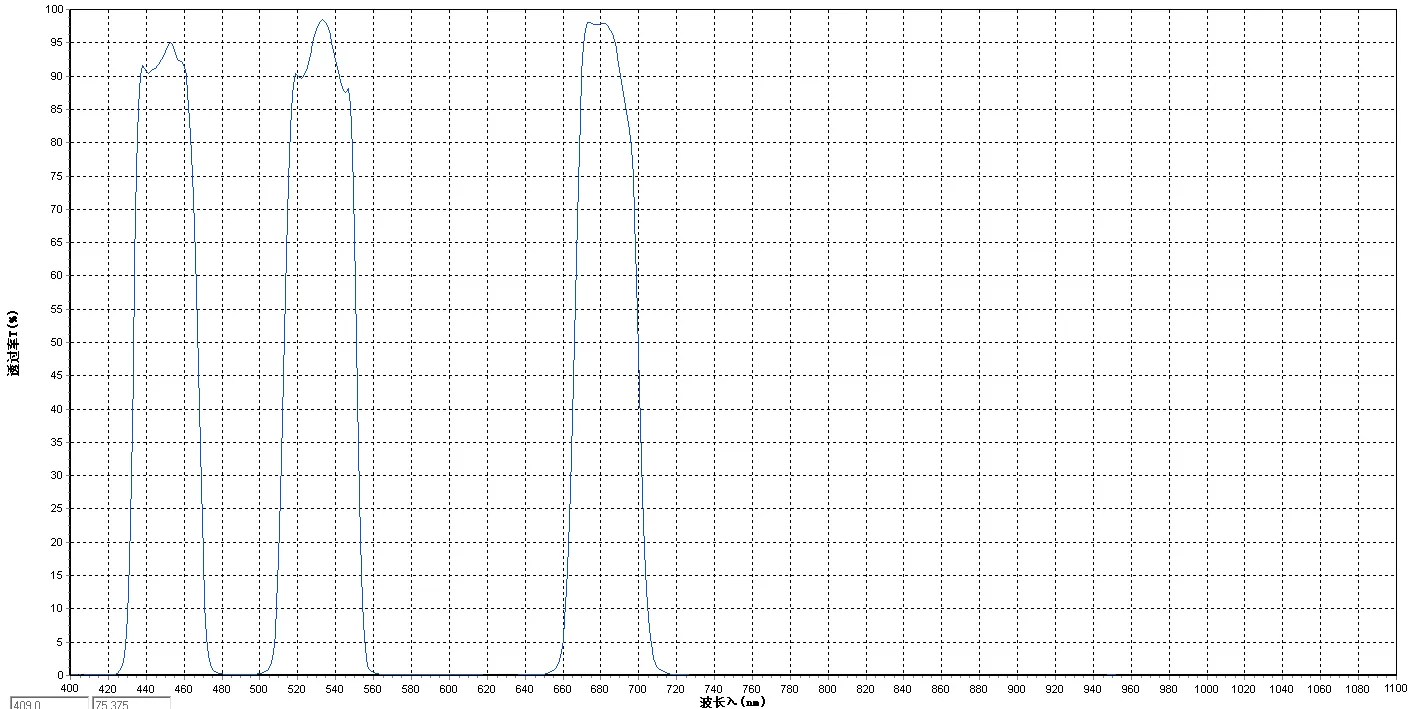
The filter doesn't have a name it's a tri-band dichroic filter that doesn't pass infrared so it can be used on a full spectrum camera without additional filters. It's made by Wuhan Especial Optic Inc.
Commentaires
Aucun commentaire pour le moment. Sois le premier à réagir.