Sensor response to infrared bands
Publié le 3 septembre 2026

It's important to know that camera sensors have a different response to shorter and longer infrared wavelengths. Here is the response of each RGB channels in the IR region between 700 and 1000nm.
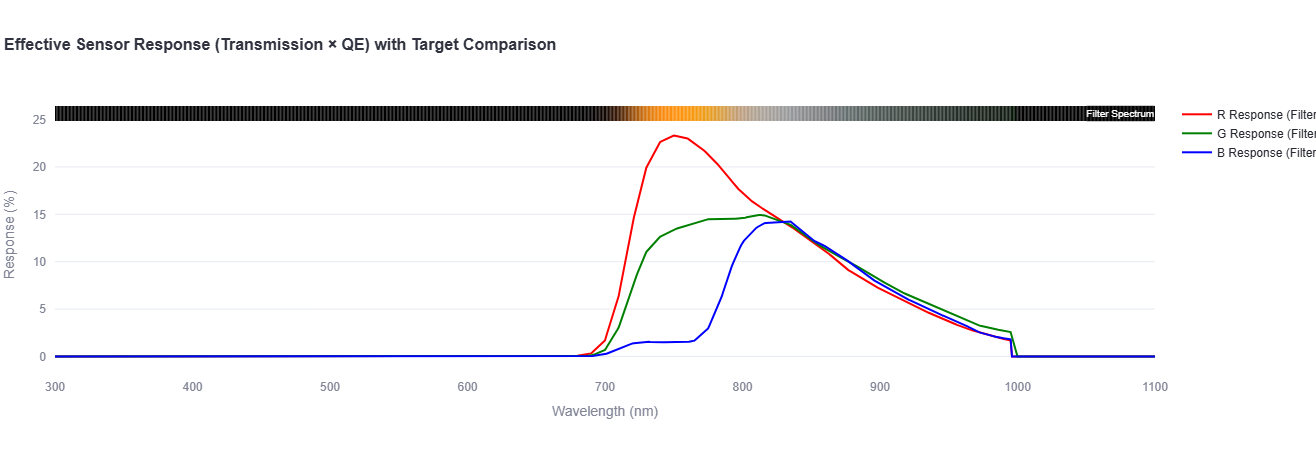
In this graph the white balance isn't applied so we can see that in absolute terms the red channel is the most sensitive to IR. The second most sensitive is the green channel and the least sensitive of the three is the blue channel.
Now let's apply the white balance and take a picture with a 715nm Longpass filter :
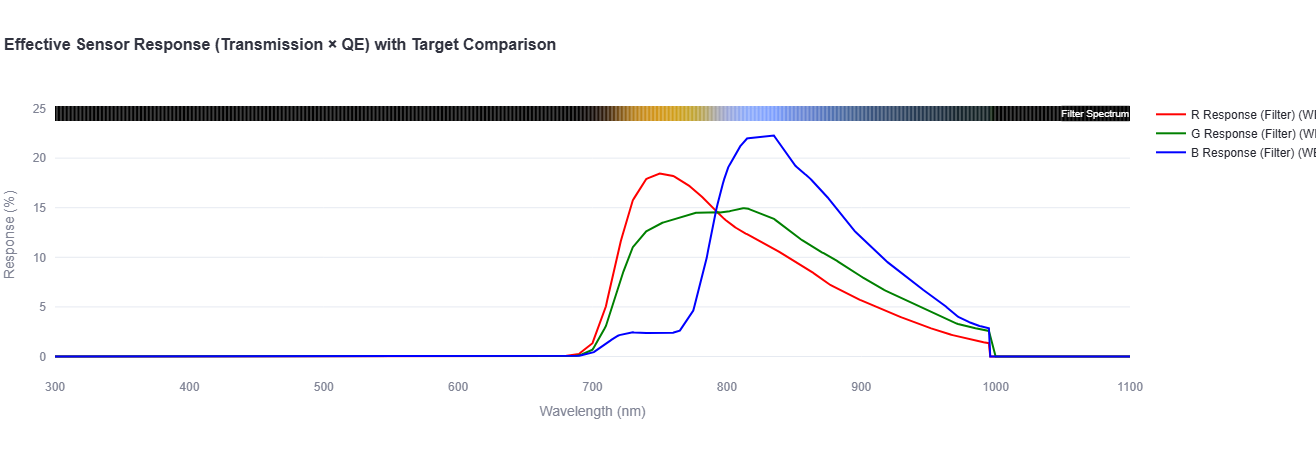

This will be our reference image in terms of white balance
Now let's add some other filter to the 715nm without changing the white balance and see how the sensor reacts.
Next shot : 715nm + GRB3 (longwave IR cut)
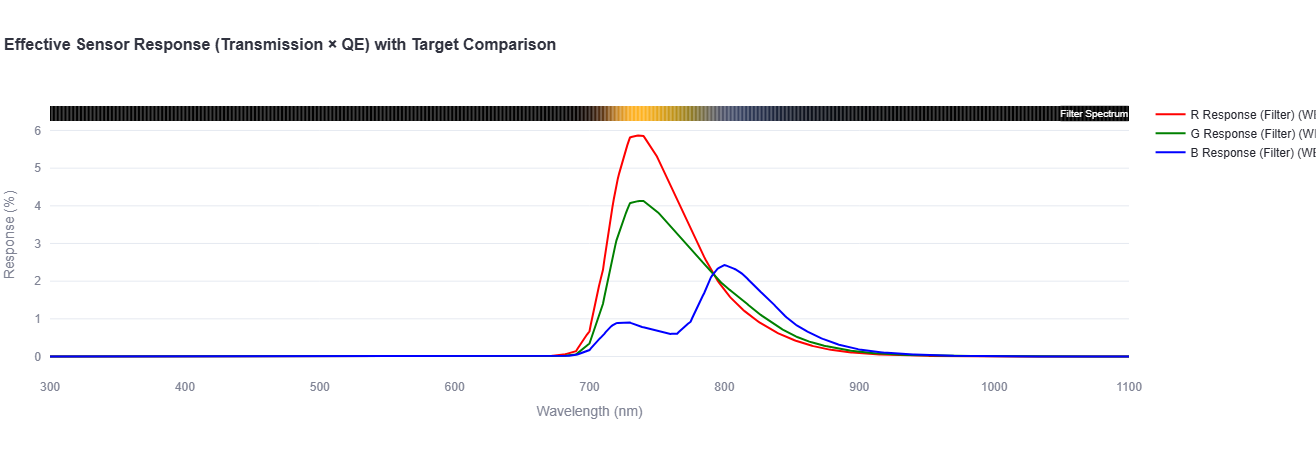

Next shot : 715nm + ZWB2
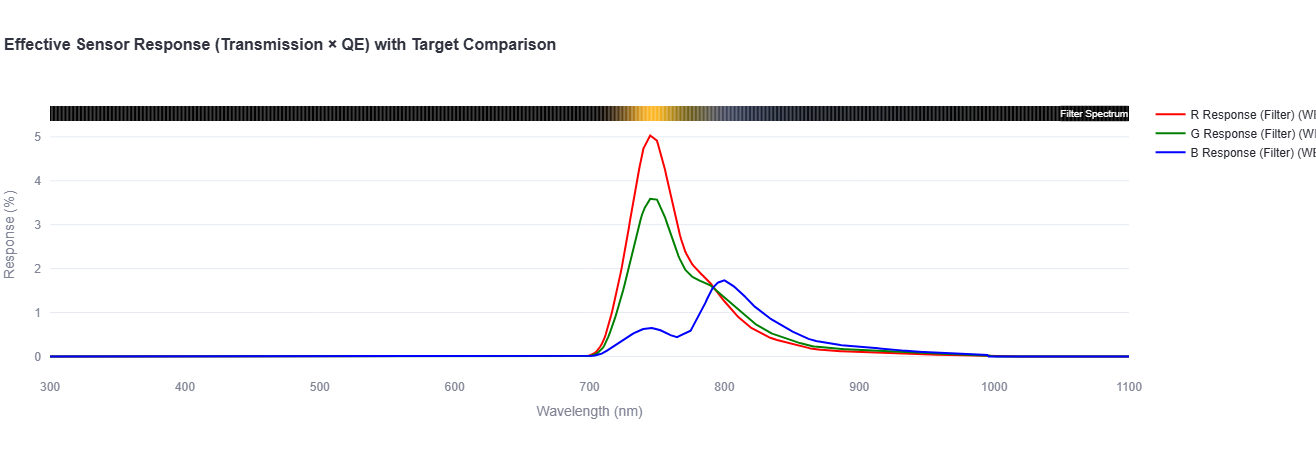

Next shot : 715 + DB850
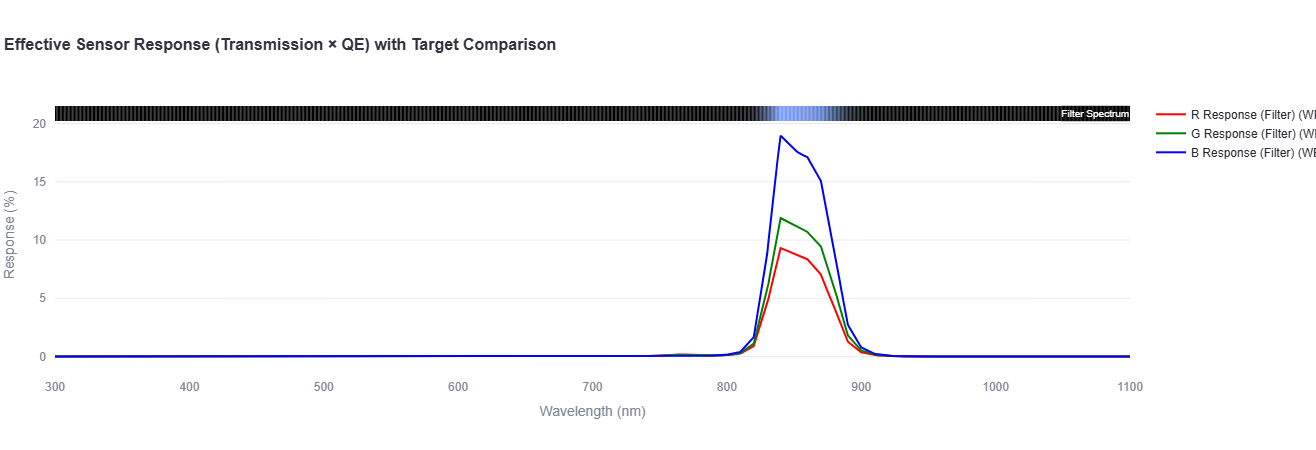

Next shot : 715 + 850nm Longpass
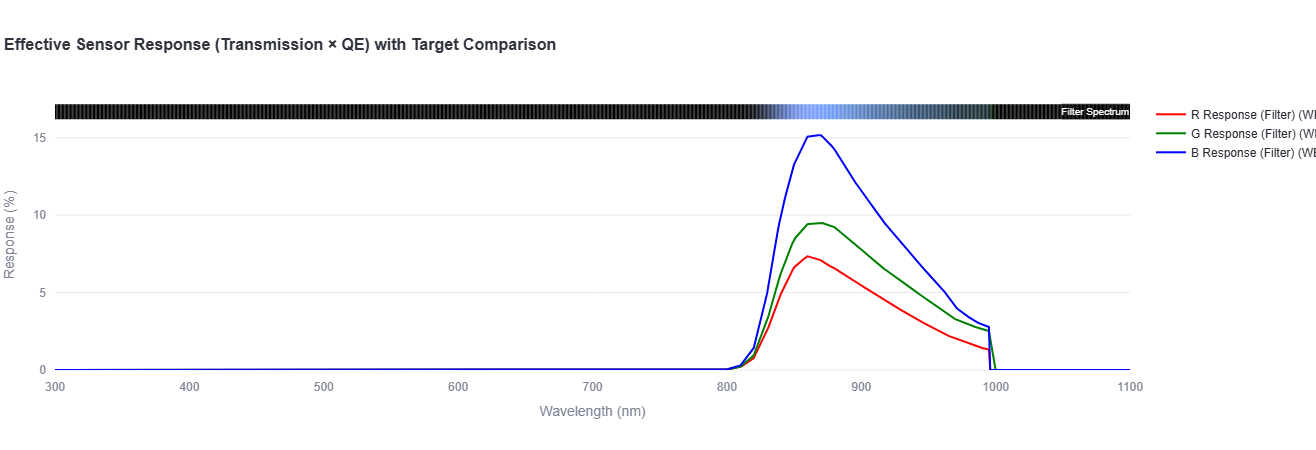

Next shot : 715 + Hoya 80A (reduces IR evenly across all the spectrum)
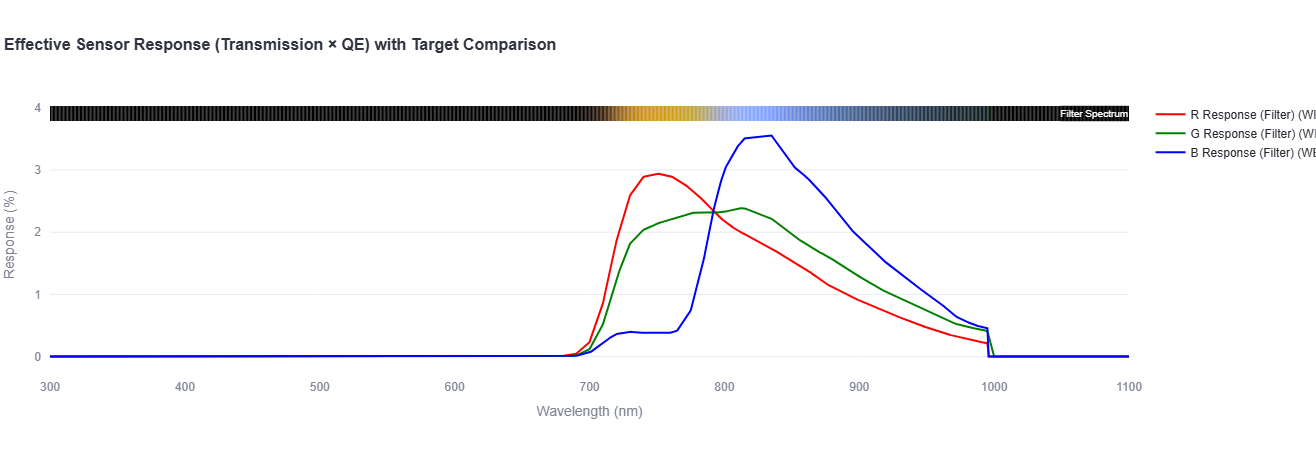

With all these exemples we've seen that at a fixed white balance the shorter IR wavelengths appear warmer and the longer wavelengths appear colder.
This information can help us choose between IR reducing filters depending on the IR color we are aiming for. If we want red foliage, it's a good idea to pick a GRB3. If on the contrary we are aiming for a blue foliage IR style, the DB850 is the better choice.
As a last exemple let's look at a grating test where all the wavelengths from an incandescent source are broken down. We can see how the sensors reacts to every wavelengths from 400nm to 1000nm.

Commentaires
Aucun commentaire pour le moment. Sois le premier à réagir.